Olympos
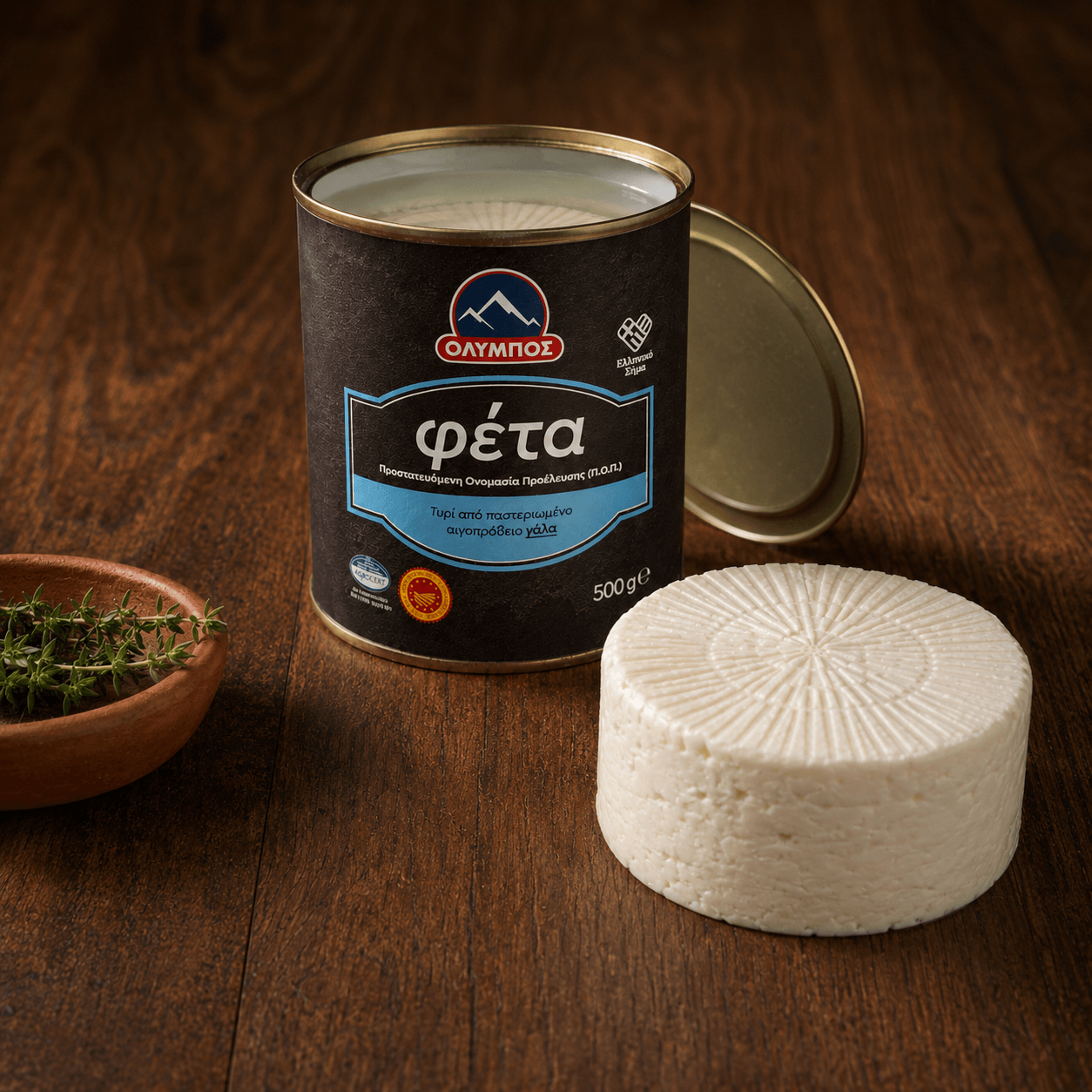
Olympos Feta PDO in Brine – Authentic Greek Cheese, Ready to Enjoy (500g)
Olympos Feta PDO in Brine – Authentic Greek Cheese, Ready to Enjoy (500g)100 in stock
Couldn't load pickup availability
❄️ FRESH DELIVERY — Shipped from Greece, arrives fresh · These products travel by express air freight in insulated packaging to protect freshness from our warehouse to your door. · 🗓️ We ship Monday, Tuesday and Wednesday only — this protects your order over the weekend. · ⏱️ Delivery in 24–48 hours from dispatch · 📦 Order preparation: 2–4 working days · 🤝 Our promise: if your order arrives damaged or not as described, contact us — we will find the right solution. · 👉 How FRESH shipping works →
-
PDO
Product Description
Product Description
The cheese that built the Mediterranean table, now in a format made for modern life.
Olympos Feta PDO is produced from pasteurized sheep's and goat's milk, following the protected designation of origin that defines authentic Greek feta. Every block carries a nutritional profile worth knowing: 16.5g of protein per 100g, naturally low in carbohydrates, and made with no additives beyond salt, cultures, and rennet. It is the kind of cheese that earns its place on the table every day, not just on special occasions.
The flavour is characteristically feta: tangy and clean, with the distinct creaminess that comes from sheep's milk and the slight sharpness that goat's milk brings. The texture holds well whether you crumble it over a salad, slice it for a plate, or let it absorb the heat of the oven in a pastry. This is the same cheese Greeks have been eating for generations, now available in a cylindrical format that is 100% recyclable and easy to open.
Shipped fresh and preserved in brine — here is why that matters.
Feta in brine is not just a traditional format. It is a genuinely superior preservation method. The brine maintains the cheese at the correct moisture level, protects the texture during transit, and keeps the flavour stable even as external temperatures rise. This is the same principle Greeks relied on to preserve feta at ambient temperature in antiquity, long before refrigeration existed. The brine does the work.
- Arrives intact: the brine protects structure and moisture throughout shipping, even in warmer months
- No quality compromise in transit: fresh dispatch combined with brine preservation means the cheese reaches you in the same condition it left Greece
- Stays fresh after opening: keep it submerged in the original brine in the refrigerator, and it holds well for weeks
How to use it
- Crumbled over a classic Greek salad with tomato, cucumber, and good olive oil
- Sliced and served as table cheese on a high-protein Mediterranean plate with olives and flatbread
- Baked into spanakopita, börek, or any cheese pastry that calls for a salty, firm filling
- Roasted whole with honey and thyme as a simple, striking starter
- Added to scrambled eggs or an omelette for a quick, protein-rich breakfast
Nutritional Components
Feta PDO in brine: a cheese with real nutritional substance.
Produced from sheep's and goat's milk under a Protected Designation of Origin, Olympos Feta delivers a nutritional profile that most supermarket cheeses cannot match. The combination of milk types brings a distinct fatty acid composition and a protein content that genuinely contributes to satiety.
Why sheep's and goats' milk makes a difference:
- Protein content: 16.5g per 100g, making feta one of the higher-protein fresh cheeses available
- Lower in lactose: sheep's and goat's milk naturally contain less lactose than cow's milk, which many people find easier to digest
- Saturated fat in context: 16.1g per 100g, typical of a full-fat cheese and consistent with moderate Mediterranean Diet consumption
- Carbohydrates: 0.7g per 100g, effectively negligible, making feta compatible with low-carb eating patterns
- Salt: 2.2g per 100g, which reflects the brine preservation method — worth noting if you are monitoring sodium intake
Nutritional values per 100g:
- Energy: 1143 kJ / 276 kcal
- Fat: 23g — of which saturates: 16.1g
- Carbohydrates: 0.7g — of which sugars: 0.7g
- Protein: 16.5g
- Salt: 2.2g
Ingredients: Pasteurized goat and sheep MILK, salt, cultures, and rennet.
Allergens are indicated in capital letters. This product contains milk. Certified PDO — produced and packaged in Greece according to the protected designation of origin for feta.
Useful Information
Useful Information
Storage guide: Brine is your best tool.
Feta in brine is one of the most naturally stable fresh cheeses you can buy. The salt solution that surrounds the cheese is not just a packaging choice — it is an active preservation environment that keeps moisture, texture, and flavour consistent from the moment it leaves Greece to the moment it reaches your table.
How to store it correctly:
- Before opening: keep refrigerated at 2°C–6°C; the sealed cylindrical pack maintains the cheese in optimal condition until the best before date
- After opening: transfer any unused portion to a clean airtight container, submerge it in the original brine, and return it to the refrigerator
- If the brine runs low: prepare a light salt solution (approximately 5g of salt per 100ml of water) to top it up and keep the cheese fully submerged
- Avoid cross-contamination: always use a clean utensil when removing cheese from the container — do not handle directly with your hands
Freshness timeline:
- Unopened, refrigerated: follow the best-before date printed on the packaging
- Opened, kept in brine, refrigerated: best consumed within 2–3 weeks; quality remains consistent as long as the cheese stays submerged
- Once removed from brine: consume within 2–3 days; texture and flavour begin to change once exposed to air
Product details:
- Format: cylindrical pack in brine, 100% recyclable, easy-open lid
- Net weight: 500g (approximately 16.6 servings of 30g)
- Origin: Greece — PDO Protected Designation of Origin
- Certifications: PDO (Protected Designation of Origin)
- Allergens: contains MILK
Why brine has always been the right answer.
Greeks preserved feta in brine long before refrigeration existed, storing it at ambient temperature using nothing more than salt water and time. The method worked because brine creates an environment where harmful bacteria cannot easily thrive, while the cheese retains its structure and its character. Today, the same logic applies: refrigerated shipping combined with brine preservation means the cheese travels better than almost any other fresh cheese format. It arrives as it should, and it keeps well once it is with you.
The brine is not just packaging — it is part of what makes this cheese what it is.
Share