Skip to product information
1 of 4

Stamatis

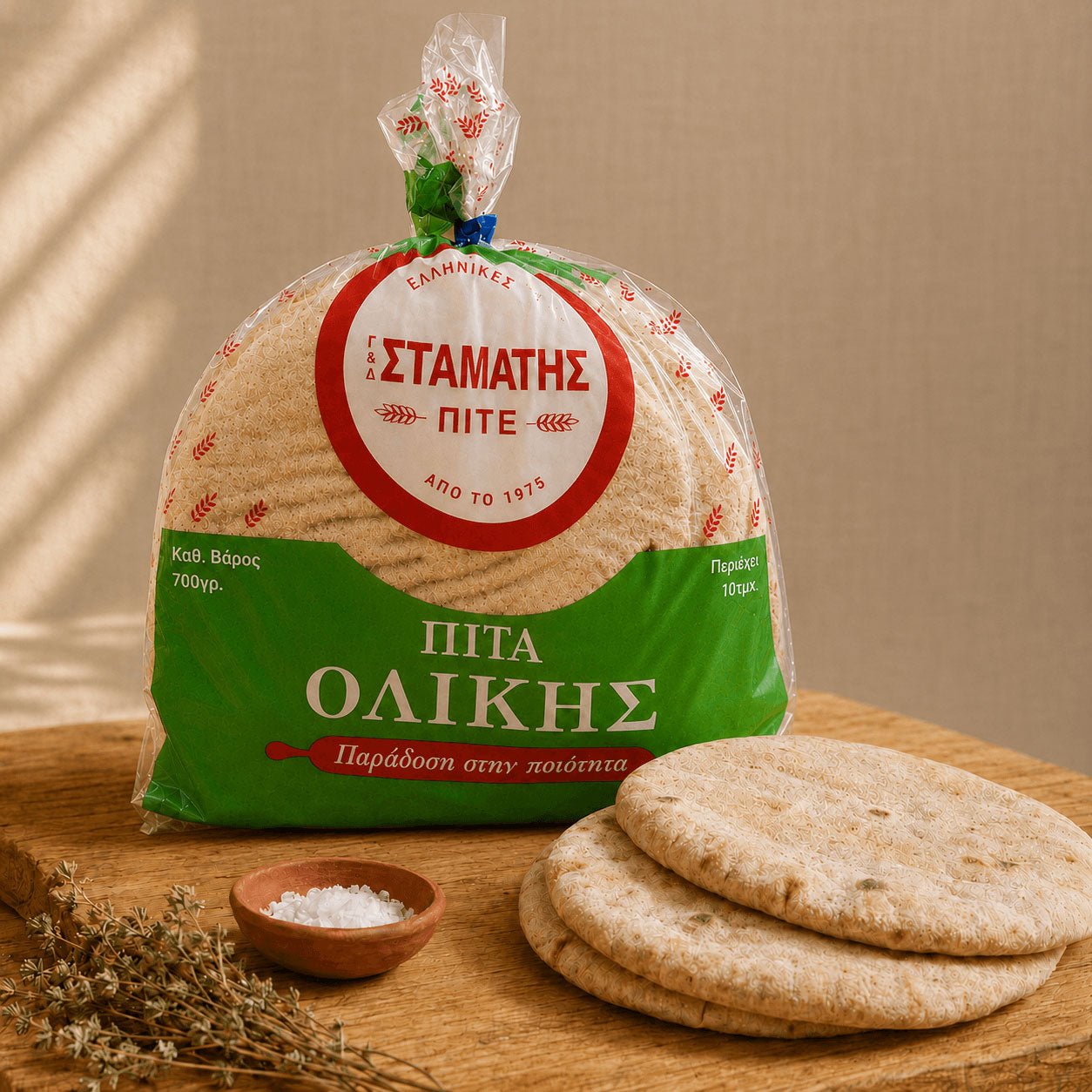
Stamatis Wholemeal Pita Bread — Hand-Stretched from Athens (18 cm, 10 Rounds)

Stamatis Wholemeal Pita Bread — Hand-Stretched from Athens (18 cm, 10 Rounds)
Regular price €7,61 EUR
Regular price Sale price €7,61 EUR
Sale Sold out
Tax included. Shipping calculated at checkout.

100 in stock

  • ❄️ FRESH DELIVERY — Shipped from Greece, arrives fresh · These products travel by express air freight in insulated packaging to protect freshness from our warehouse to your door. · 🗓️ We ship Monday, Tuesday and Wednesday only — this protects your order over the weekend. · ⏱️ Delivery in 24–48 hours from dispatch · 📦 Order preparation: 2–4 working days · 🤝 Our promise: if your order arrives damaged or not as described, contact us — we will find the right solution. · 👉 How FRESH shipping works →
  • CreteVegan

Product Description

The pita behind every souvlaki in Athens. Now hand-stretched, wholemeal, and delivered to your door.


Stamatis has been supplying the souvlatzidika of Athens for decades. If you have eaten a souvlaki in the Greek capital, the pita in your hand was almost certainly a Stamatis. This is the wholemeal variant of that same pita: 10 rounds of 18 cm, made in Athens with a blend of wheat and wholemeal flour, stretched entirely by hand from first touch to last. No machine pass. No intermediate shaping stage. Each piece is irregular because it is made by a person, not a press.


The texture is soft and pliable, with a slightly denser crumb than a standard white pita — a direct result of the wholemeal flour content. It holds fillings without tearing, warms through in seconds on a grill, a dry frying pan, or a barbecue, and keeps its structure even with generous amounts of tzatziki, grilled meat, or roasted vegetables. The crust picks up faint char marks when grilled, which adds to the eating experience rather than detracting from it.


With 8.1g of protein and 3.2g of dietary fibre per 100g, this pita contributes more to a balanced plate than an industrial equivalent. The fibre comes from the wholemeal flour fraction and supports digestion and satiety without making the pita heavy or difficult to work with. It is the kind of base ingredient that earns its place in a regular rotation: versatile, honest, and made by people who have been doing this at professional scale for a long time.


How to use it

  • Classic souvlaki wrap — warmed on a cast iron pan or grill, filled with grilled pork or chicken, tzatziki, tomato, and red onion, folded tight
  • Gyros-style plate — opened flat, layered with slow-roasted meat, chips, and sauce, served open rather than folded
  • Meze base — torn by hand and used to scoop tzatziki, taramosalata, melitzanosalata, or any other dip at the table
  • Everyday flatbread — warmed and served alongside soups, stews, or roasted vegetables as a bread alternative with more character than a standard roll
  • Freezer-ready batch — freeze the full pack on arrival and pull individual pieces as needed; warm directly from frozen on a hot surface without defrosting first

Nutritional Components

A working pita with genuine nutritional substance.

The Stamatis wholemeal pita is not a health product — it is a professional-grade flatbread used daily in the busiest souvlatzidika in Athens. The wholemeal flour fraction gives it more fibre and a slightly denser profile than a standard white pita, without compromising its workability or softness.

What the wholemeal fraction adds:

  • Dietary fibre (3.2g per 100g): higher than most commercial pita bread, supporting digestion and helping maintain satiety after a meal
  • Protein (8.1g per 100g): a useful contribution to a balanced plate, especially when paired with a protein filling such as grilled meat, legumes, or cheese
  • Lower sugar content (2.5g per 100g): modest for a bread product, reflecting the absence of added sweeteners beyond what fermentation requires

Nutritional values per 100g:

  • Energy: 1030 kJ / 245 kcal
  • Fat: 1.1g — of which saturates: 0.3g
  • Carbohydrates: 50g — of which sugars: 2.5g
  • Fibre: 3.2g
  • Protein: 8.1g
  • Salt: 1.1g

Ingredients: wheat flour, wholemeal flour 5%, malt flour, thickener agent, emulsifier, leavening yeast, calcium propionate, water, salt.

Allergens: contains gluten. May contain traces of sesame and malt flour.

Vegan-friendly. Calcium propionate is a naturally occurring salt used as an approved bread preservative; it does not affect taste or texture.

Useful Information

Storage guide: keeping your pitas ready when you need them.

The Stamatis wholemeal pita is designed to work from both the fridge and the freezer — which makes it one of the most practical bread products to keep in stock. The critical rule applies only to frozen pitas: never defrost before warming. Go straight from freezer to heat source.

How to store it correctly:

  • At room temperature: up to 3 days from production, in a sealed bag away from direct heat or humidity
  • Refrigerated (0–4°C): up to 6 days — keeps the pita soft and ready to warm without any preparation
  • Frozen (−18°C): up to 12 months — the recommended method if you are buying in quantity or want a permanent staple on hand

Freshness timeline:

  • Unopened at room temperature: 3 days
  • Refrigerated (0–4°C): 6 days
  • Frozen (−18°C): up to 12 months

How to warm it:

The pita can be warmed on a grill, in a toaster, in a dry frying pan, or on a barbecue. The frying pan and barbecue produce the best char marks and the most authentic result. If warming from frozen, place directly onto the heat source — do not defrost first.

Product details:

  • Format: 10 soft rounds, 18 cm diameter
  • Production method: hand-stretched throughout — no machine shaping
  • Origin: Athens, Greece
  • Brand: Stamatis
  • Allergens: contains gluten. May contain traces of sesame and malt flour.

Why each pita looks slightly different.

Hand-stretching means no two pitas in the pack are identical. The edges are uneven, the thickness varies slightly from piece to piece, and the surface is not perfectly smooth. This is not a quality defect — it is the direct consequence of a process that uses no moulds or mechanical rollers. The irregularity is the proof that this is the real thing.

View full details